
Before comparing reaction times, check what starts and stops each clock. A stimulus-to-click test, a visibility-to-first-movement interval and a visibility-to-first-shot interval describe different measurements. This guide explains those distinctions without assigning a professional benchmark to your result.
What Reaction Time Means Outside a Game
A simple reaction-time test measures the interval between a defined stimulus and a defined response, such as a light appearing and a key press. Keep that definition with the result when comparing tests.
Why Timing Definitions Matter
For a visibility-to-first-shot interval, define the start as the moment an opponent becomes visible and the end as the first shot. That definition does not tell you when the player consciously noticed the opponent. A first-movement measurement ends at a different event; time to kill ends at the kill. Name the events before comparing numbers.
What a Short Interval Does Not Explain
A short visibility-to-shot interval alone does not establish why the player fired. Anticipation or a response to another cue are possible explanations, not conclusions proved by timing alone.
How to Compare Your Own Number Honestly
Check the start event, end event, task, setup and population being measured. Matching endpoints alone does not establish that two tests are equivalent. For a percentile, identify whether the sample contains events, runs or individual players. A percentile of recorded event times does not establish your rank among professional players.
What the Number Does Not Say
A time ending at the first shot does not establish whether that shot hit. Read timing and accuracy as separate results; neither is a complete measure of performance.
Explore ImbaAim
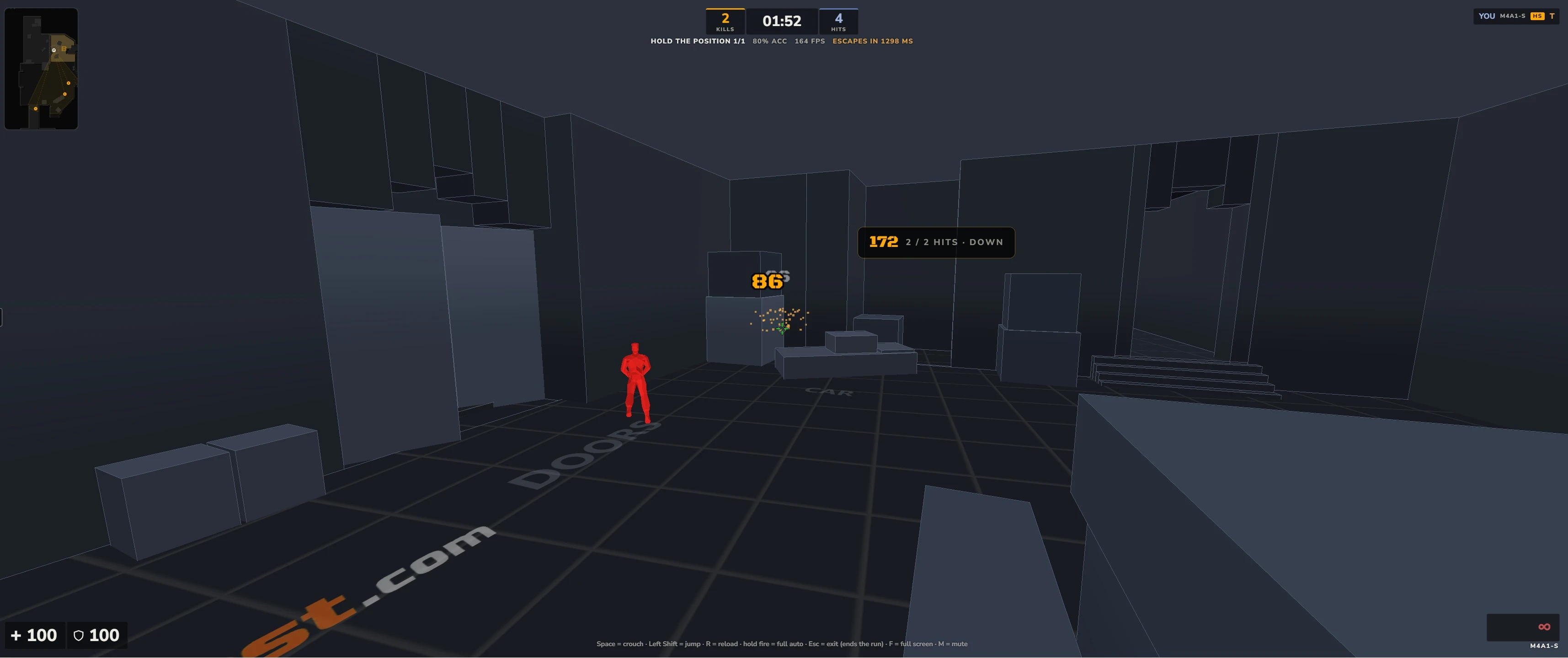
Visit the CS2 aim trainer page for access information. Before comparing a trainer result with another test, check which events its timer measures.