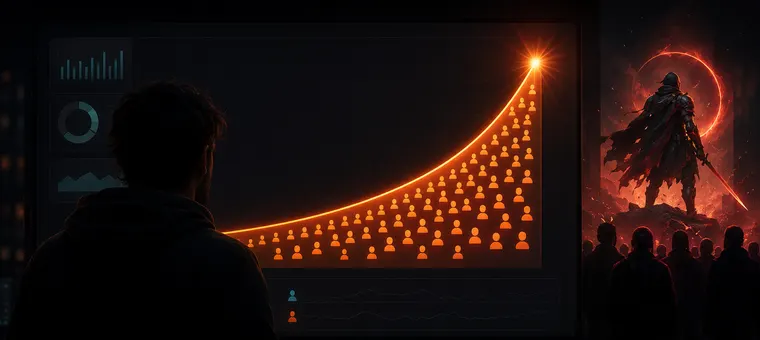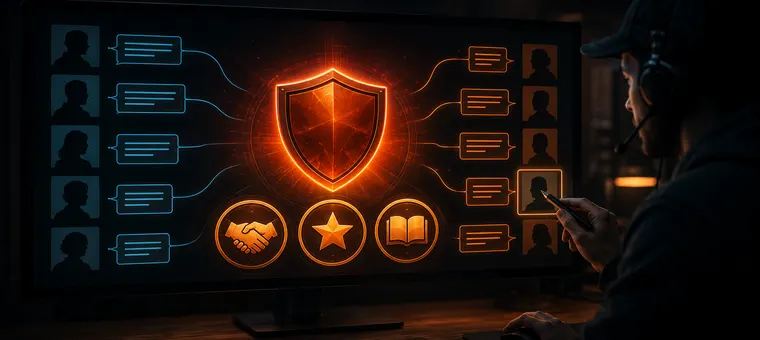


Publish a mod, a map or a skin on the Steam Workshop and you're in a feed with millions of other items, and the browse page we checked opens on a Most Popular sort by default. Where you land in that sort decides whether anyone ever scrolls past your thumbnail. The inputs aren't secret. They're the engagement counters on every item page.
The Signals That Count
Ratings. The thumbs up/down votes that produce an item's star rating.
Subscribers. For installable content (mods, maps, configs) the subscriber count is the number shown on the item page, and the one a player sees before trying an unknown mod.
Favorites. Lighter than a subscription: a player marks the item without installing it.
The popularity sort works in a time window, one week by default, so what an item gathers early is what that window can see. Valve does not publish how each counter is weighted inside those sorts.
The Cold-Start Problem
Every creator hits the same wall: visibility requires engagement, engagement requires visibility. Established creators skip it. Their subscriber base sees each new upload immediately and votes early. A first upload from an unknown account gets its launch-window traffic from friends and whatever a community post brings in. If that trickle does not register in the short popularity windows, the item drifts down the pages as newer uploads arrive.
What You Can Control
The basics still matter: a clean thumbnail that reads at 200 pixels, an honest description with the right tags, and updates that bump you back into recent feeds. Post your item where its audience already gathers.
And the counters themselves can be seeded. Our Steam Workshop boost adds favorites and subscribers from aged Steam accounts we run ourselves, at least six years old, spread over days. For CS2 skin submissions specifically, our CS2 skin vote boost does the same for ratings. Both run without any login to your account.
Two neighbouring surfaces are worth keeping apart, because Steam counts them separately from Workshop items. Artwork, screenshots and guides on your own profile have their own likes and favorites, and seeding those is what our Steam likes and favorites boost does — a different counter from the one on a Workshop entry, on a different page. The other is the line above about posting where the audience already gathers: on Steam that usually means a group, and a group with members in it reads as a place worth joining while an empty one gets scrolled past, which is the gap our Steam group members boost fills. Same aged accounts, same pacing over days, no login either way.